You want to launch a business but the blank page feels overwhelming. ChatGPT can act as a brainstorming partner, market analyst, and copywriter rolled into one. This guide walks you through every stage, from the first idea to launch day, with specific prompts and real examples.
Why Would You Use ChatGPT to Start a Business?
Starting a business involves dozens of small tasks that stack up fast. You need to test an idea, study competitors, write a plan, name the brand, build a website, and attract customers. Each task demands a different skill. ChatGPT handles most of them at conversational speed, which means you focus on decisions instead of drafting. I recommend it especially for solo founders working on a tight budget.
Imagine you run a small pottery studio. You know your craft, but writing a business plan or a landing page feels foreign. Instead of hiring three freelancers, you open one chat window and walk through each step with targeted prompts. The output is a draft, never a final product, yet it saves hours of staring at an empty document.
What Do You Need Before You Start?
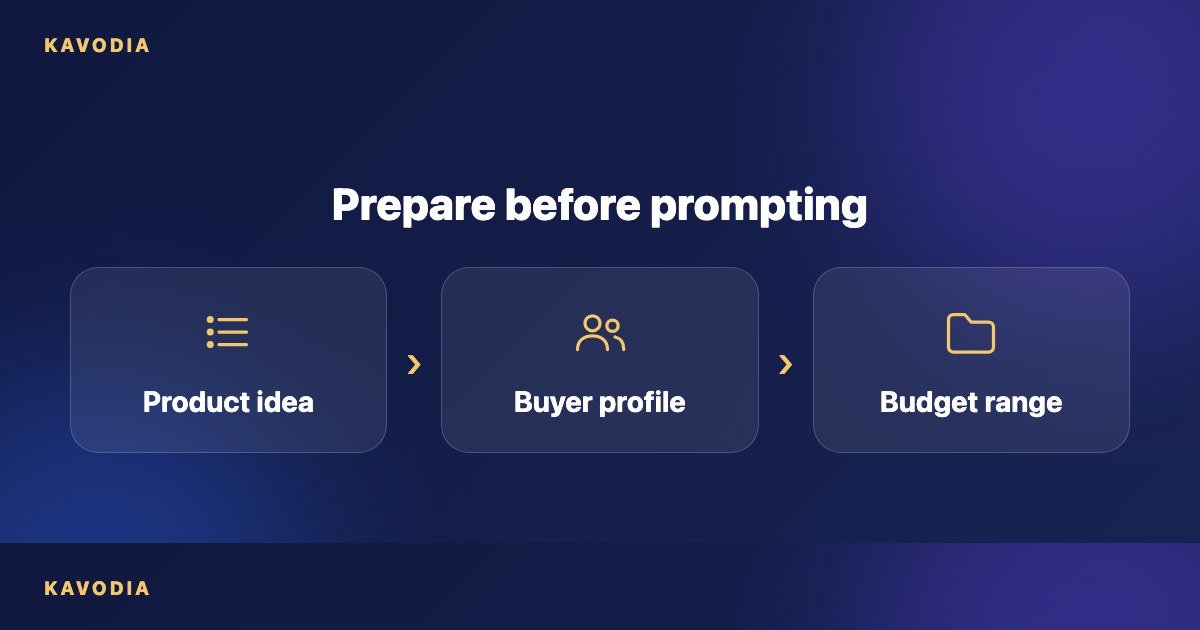
You do not need coding skills or a paid subscription. A free ChatGPT account gives you access to the core features. Prepare three things before your first prompt. First, a rough idea of the product or service you want to sell. Second, a short profile of the people who would buy it. Third, an honest budget range for the first three months.
Bringing these details into the conversation makes the output specific. The OpenAI prompt engineering guide calls this "writing clear instructions." When you tell the model your constraints upfront, it avoids generic answers.
Imagine a graphic designer planning to sell logo packages. She types her skills, her audience (small restaurants), and her startup budget ($500). ChatGPT returns five business angles ranked by overhead. Without those details, it would suggest ideas that require investment she cannot afford.
How Do You Brainstorm a Profitable Idea?
Ask ChatGPT to generate business ideas based on your skills, budget, and target market. The key is to add constraints. A prompt like "Give me ideas" returns vague results. A prompt that states your industry, your available hours per week, and your maximum startup cost returns actionable options.
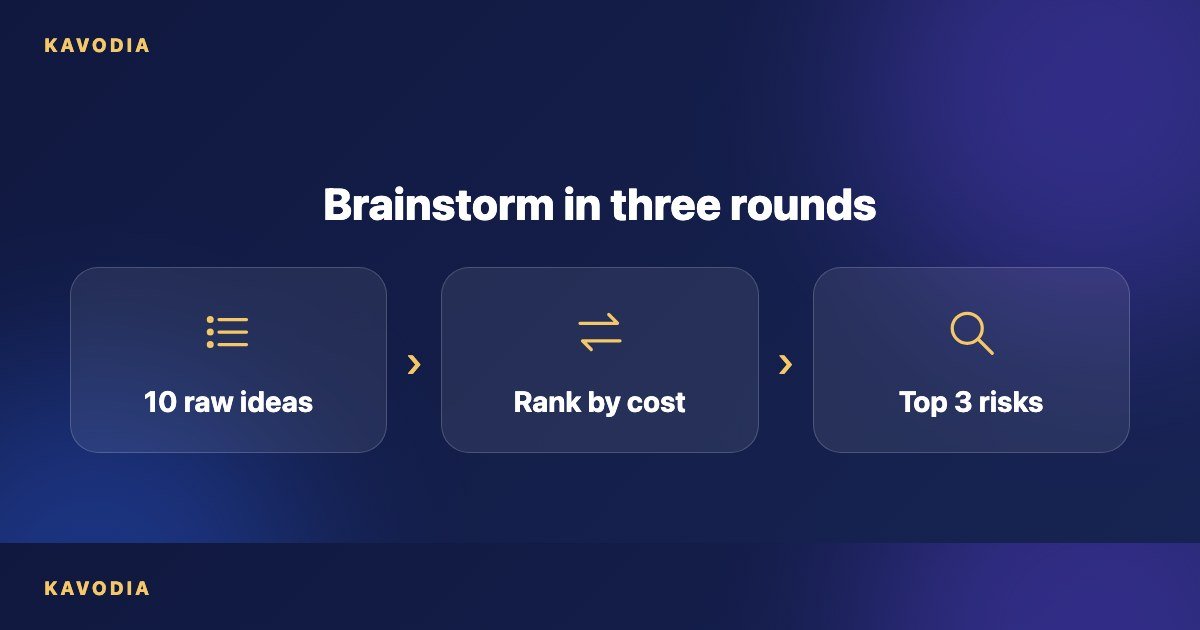
OpenAI recommends splitting complex tasks into simpler subtasks. Apply this here: first ask for ten raw ideas, then ask ChatGPT to rank them by startup cost, then ask it to list the top three risks for each finalist. Three focused prompts beat one giant request.
Let's take an example. A retired teacher with tutoring experience and $300 asks for online education ideas. ChatGPT suggests a niche math course for homeschool parents, a test-prep worksheet shop, and a group coaching service. Each comes with a revenue model because the prompt demanded it.
I suggest you save every prompt and output in a single document at this stage. You will reuse the language later for your website copy and marketing messages.
How Do You Validate the Idea Before Spending Money?
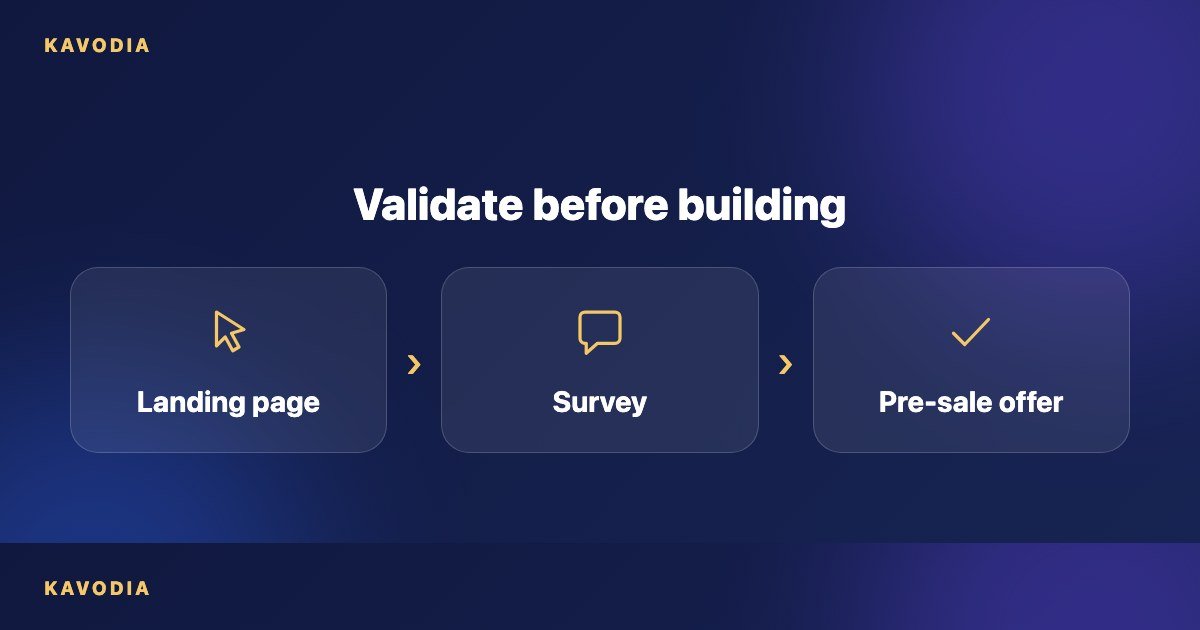
An idea that sounds good on screen can fail in the real market. Use ChatGPT to draft a short validation plan. Ask it to list five ways to test demand without building a full product. Common methods include a landing page with an email signup, a pre-sale offer, or a short survey sent to your network.
Then ask ChatGPT to write the actual survey questions or the landing page headline and subheadline. You can launch a simple page on a free website builder in an afternoon and start collecting responses the same day.
Imagine a fitness coach who wants to sell meal plans. She asks ChatGPT to write five survey questions for Instagram followers. Within a week, 80 responses confirm that budget-friendly meal prep is the top request, not premium plans. She pivots before spending a cent on content she would have thrown away.
I find this step the most underrated. Many guides jump from idea to business plan, skipping real feedback entirely.
How Do You Research Your Market and Competitors?
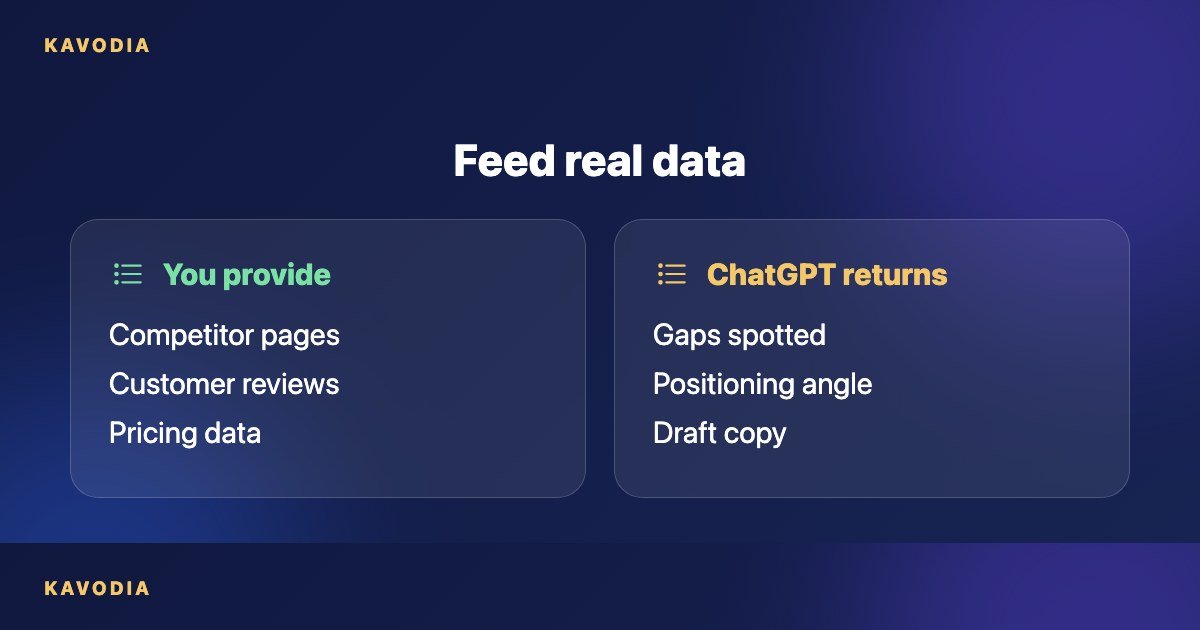
Ask ChatGPT to list the main competitors in your niche. Then ask it to summarize their strengths and weaknesses based on information you feed it. Paste excerpts from competitor websites, customer reviews, or public pricing pages into the chat. ChatGPT works best with reference text you provide rather than its own general knowledge.
The OpenAI prompt engineering guide stresses providing reference text to reduce errors. Copy a competitor's "About" page into the chat and ask: "What promise does this brand make, and what gap does it leave?" The answer becomes the foundation of your positioning.
Let's take an example. A candle brand owner pastes three competitor product pages into ChatGPT. The model spots that none of them mention burn time per ounce. She makes that her headline claim, backed by lab test results. That single detail sets her apart on search results and marketplaces.
How Do You Write a Business Plan With ChatGPT?
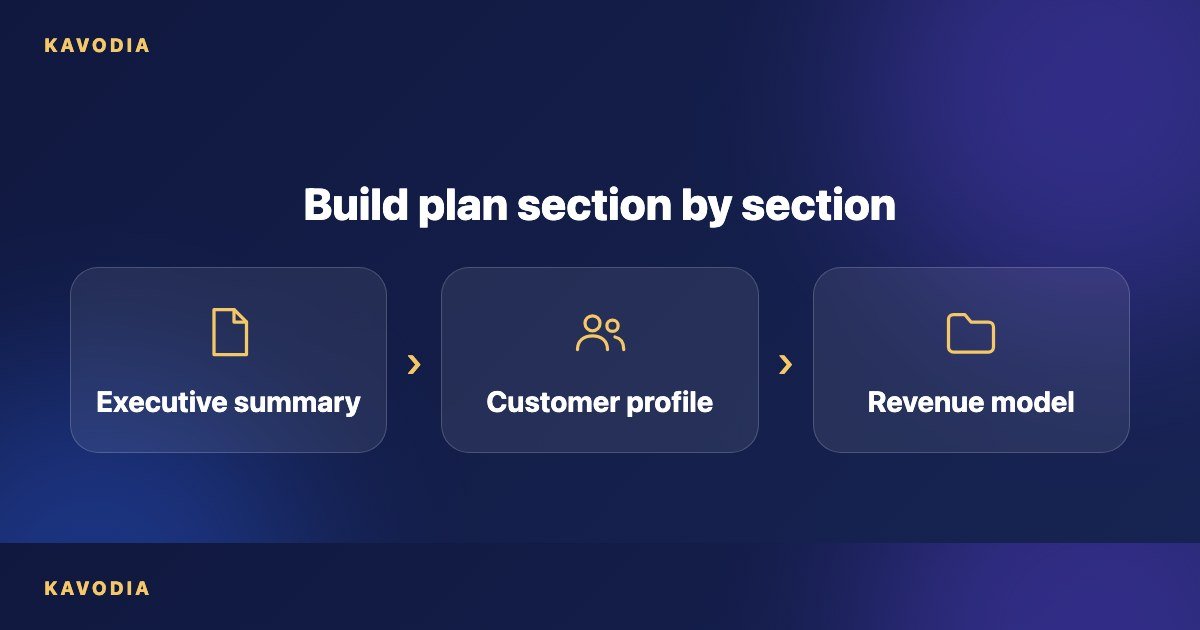
Do not ask ChatGPT to "write a business plan." That prompt returns a bloated, generic document. Instead, request each section one at a time: executive summary, target customer profile, revenue model, marketing channels, and a 30-day action list. Each prompt gets context from the answers you already received in earlier steps.
OpenAI calls this approach "splitting complex tasks into simpler subtasks." A five-section plan built prompt by prompt is sharper than a one-shot draft. After each section, review the output, correct any assumptions, and feed the corrected version back before moving on.
Imagine a pet-sitting startup founder. He asks ChatGPT to write the revenue model section. The first draft assumes $50 per visit. He knows his local rate is $35, so he corrects that and asks for a revised break-even calculation. The second draft matches reality.
I always advise printing the final plan and reading it aloud. If a sentence sounds stiff or unclear, rewrite it in your own words.
What Legal and Financial Steps Should You Cover?
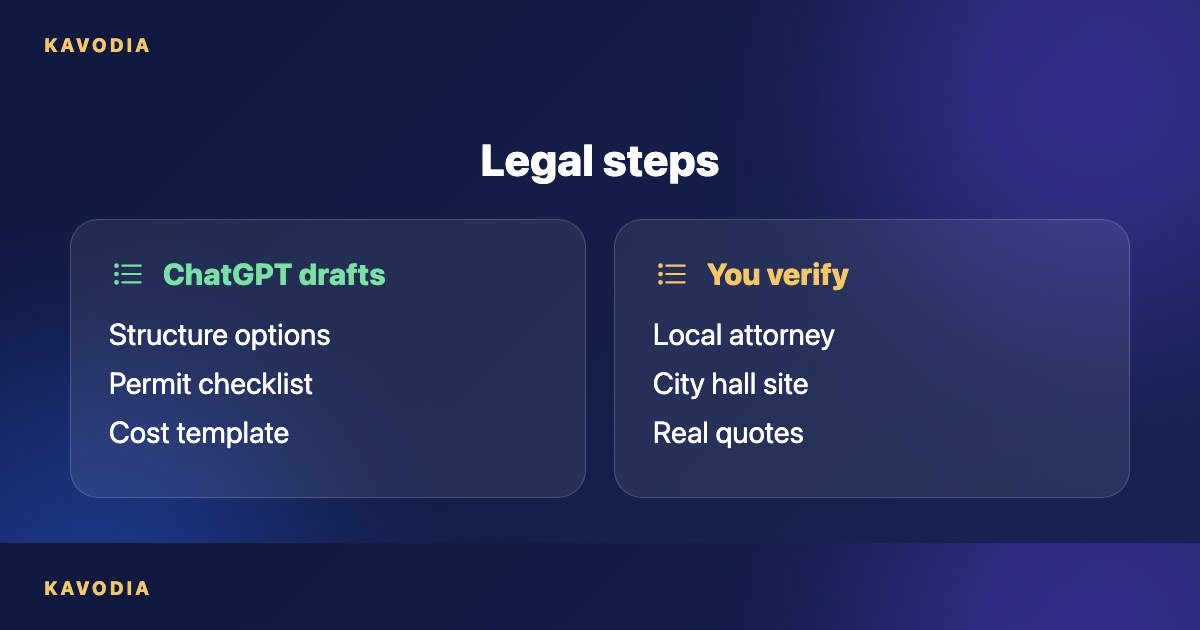
ChatGPT can outline the typical legal structure options for a small business, such as sole proprietorship, LLC, or corporation. It can list common permits or licenses by industry category. It cannot give you binding legal advice, so treat its output as a checklist to discuss with a local accountant or attorney.
Ask ChatGPT to create a startup cost spreadsheet template with categories for fixed costs, variable costs, and one-time expenses. Then fill in the numbers yourself using real quotes from suppliers and service providers.
Here is a real scenario. A bakery owner asks ChatGPT which licenses a food business typically needs. The model lists health permits, food handler certifications, and business registration. She takes that list to her city hall website and confirms the exact requirements for her state.
How Do You Name and Brand Your Business?
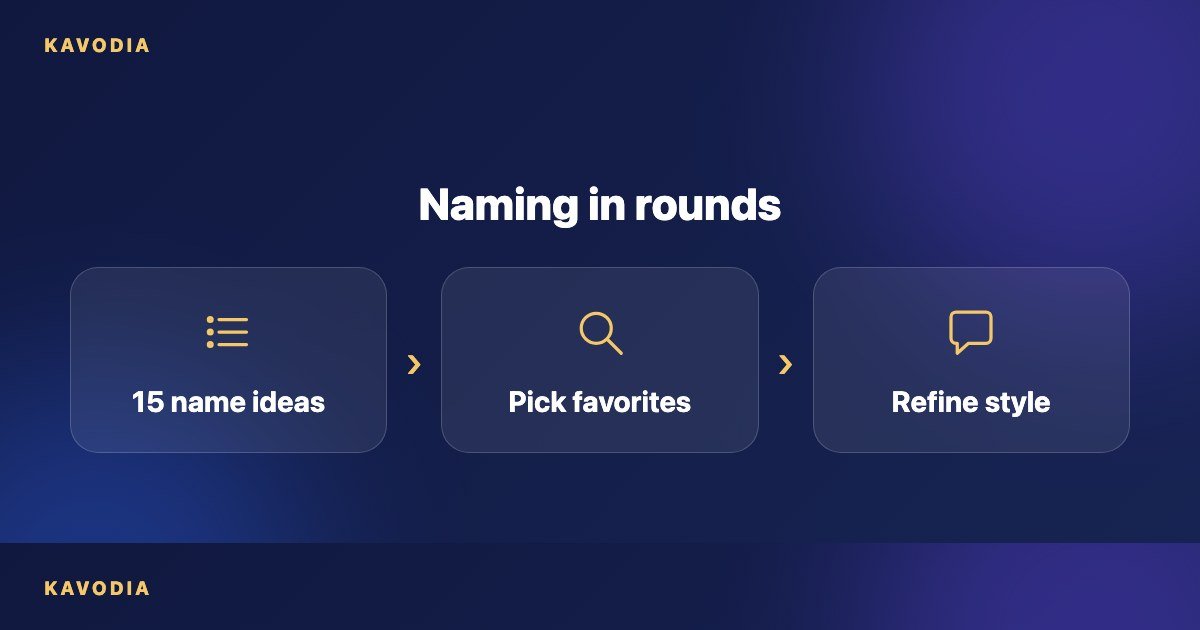
Ask ChatGPT for 15 to 20 name ideas. Add constraints: length (two words maximum), tone (playful, professional, or minimalist), and domain availability hints. Then ask it to write a tagline and a two-sentence brand story for the top three names.
A common mistake is accepting the first batch. I recommend running two or three rounds. After each round, tell ChatGPT which names you liked and why. It narrows the style and produces stronger candidates.
Imagine a subscription box for artisan coffee. The founder wants a short, warm name. ChatGPT suggests "MugRoast," "BeanPost," and "CupForge." She picks "BeanPost" because it hints at delivery. ChatGPT then writes a tagline: "Fresh beans, your door, every week."
How Do You Write Website Copy That Ranks and Converts?
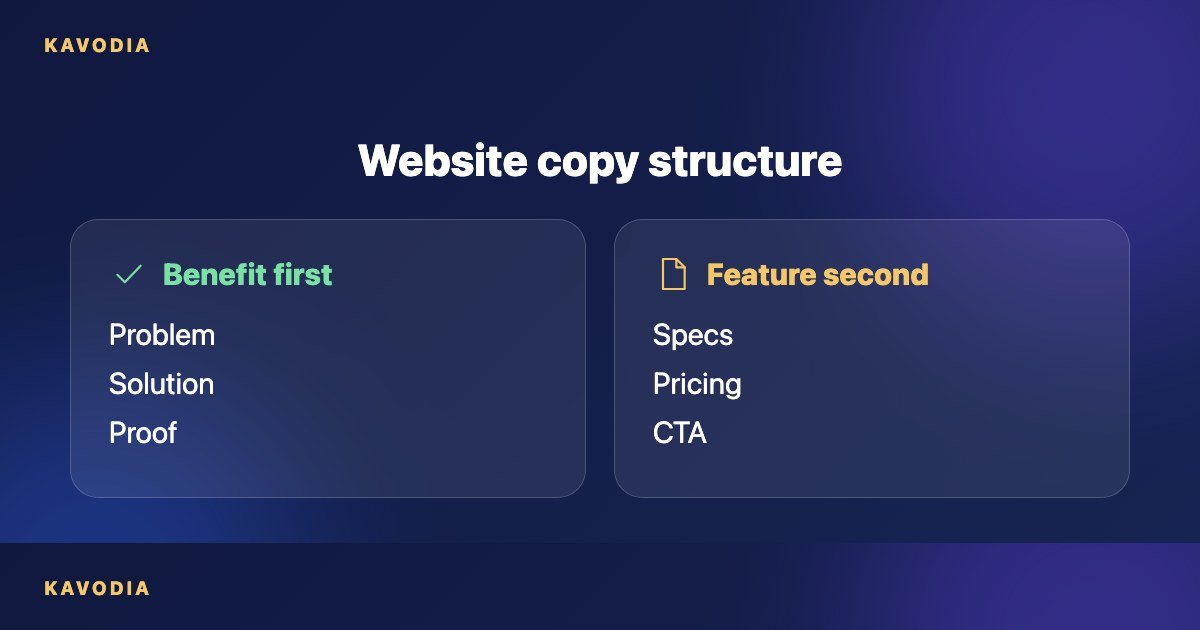
Your website needs a homepage headline, a subheadline, a benefits section, and a call to action. Ask ChatGPT to draft each block separately. Provide your target keyword, your unique selling point, and the action you want visitors to take.
The Shopify enterprise blog recommends leading with benefits and supporting with features. Apply the same structure in your ChatGPT prompt: "Start with the problem, show the solution, end with proof." This approach matches what search engines reward and what readers scan for.
Shopify also warns against copying manufacturer text or generic descriptions. The same rule applies to AI output. Always rewrite ChatGPT drafts in your own voice. Change the examples, add a personal detail, and cut any sentence that sounds like it could appear on any website.
Let's take an example. A freelance photographer asks ChatGPT to write a homepage headline for wedding photography. The first draft reads "Capturing your special day." She rewrites it to "Real moments, no stiff poses" and adds a line about her ten years shooting outdoor ceremonies.
I recommend placing your primary keyword in the page title and in the opening paragraph. This is basic SEO practice that keeps your page relevant to both search engines and readers scanning for a quick answer.
How Do You Build a Marketing Plan Before Launch?
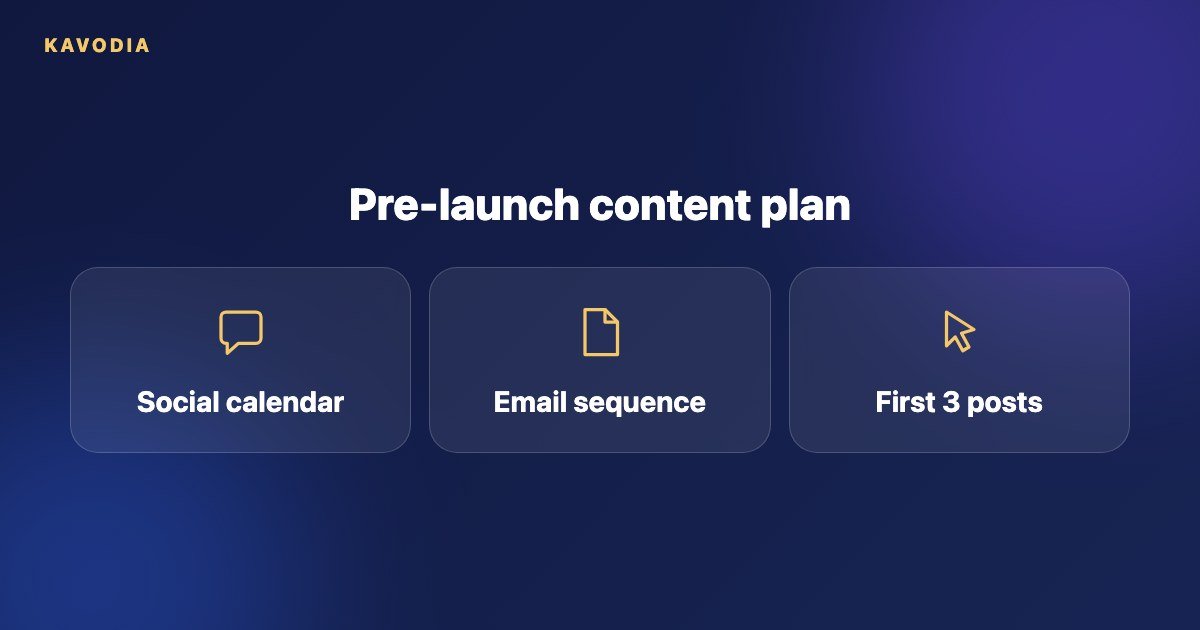
Ask ChatGPT to create a four-week social media content calendar. Specify the platform, the posting frequency, and the content format you prefer (short text, carousel, or video script). Then ask it to write the first three posts so you have a template to follow.
Also ask ChatGPT to draft a three-email welcome sequence for people who sign up on your pre-launch landing page. Each email should have one goal: introduce the brand, share a story, then offer an early-bird incentive.
Imagine a coaching business launching on LinkedIn. The founder asks ChatGPT for 12 post ideas over three weeks: four personal stories, four tips, and four client results. She edits each post to match her voice, adds a real anecdote, and schedules them using a free tool.
How Do You Write Product Descriptions That Sell?
If you sell physical or digital products, each listing needs a clear description. The Shopify SEO guide recommends placing the target keyword in the title and in the opening copy. Avoid stuffing the same word five times. Use natural variations instead.
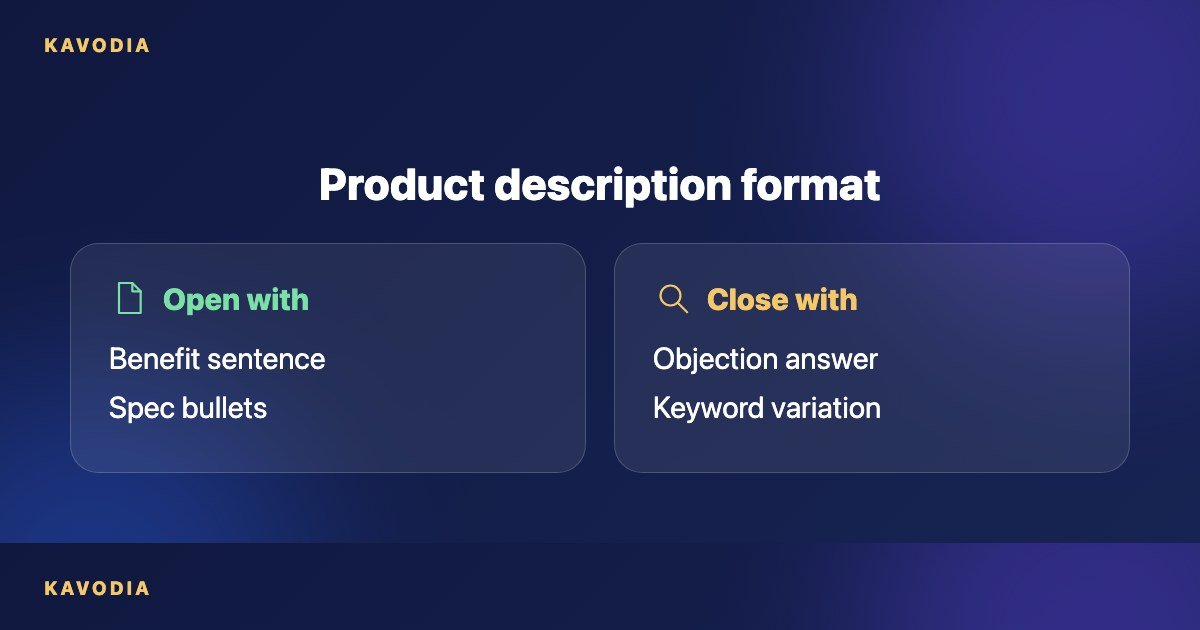
Structure each description with a benefit-first sentence, followed by three to five specification bullets, and a closing line that addresses the most common objection. Ask ChatGPT to draft descriptions in this format, and always feed it the exact product specs from your own records.
Shopify notes that duplicate manufacturer copy hurts search rankings. Never paste a supplier's text into ChatGPT and ask it to "rewrite slightly." Give it raw specs and your brand voice guidelines, then let it build from scratch.
Imagine an online store selling handmade candles. The founder provides the wax type, burn time, scent notes, and jar size. ChatGPT writes a description that opens with "45 hours of lavender without a single wick trim." That line speaks to the buyer's real question: how long does it last?
How Do You Set Up Prompt Templates You Can Reuse?
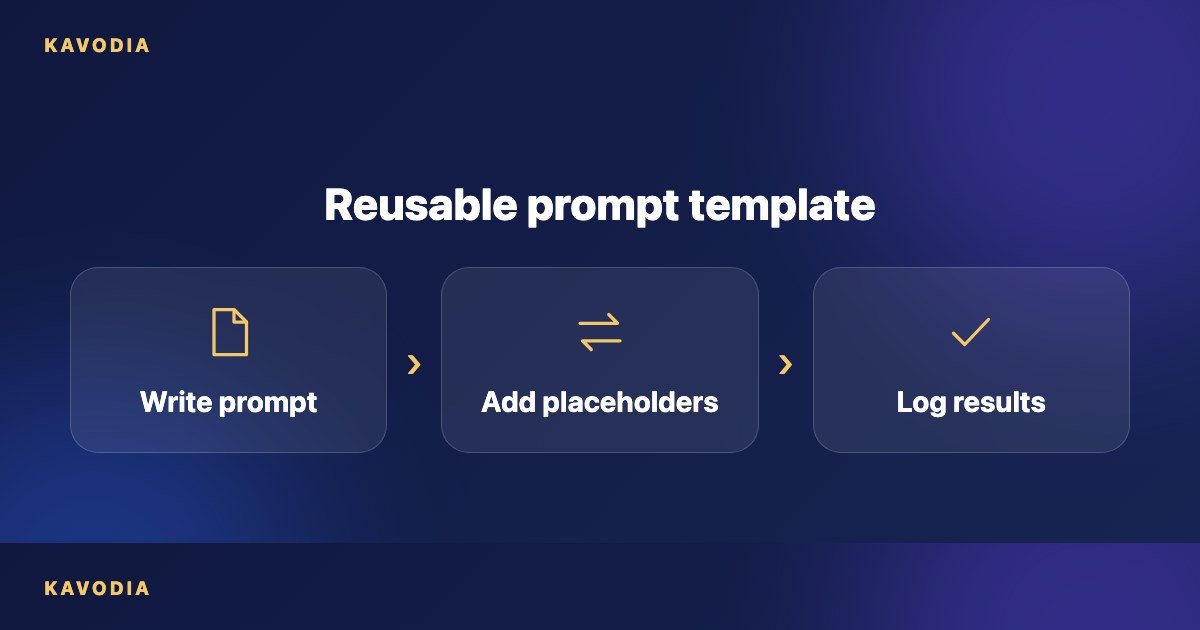
Once you find a prompt that works well, save it as a template. Replace the specific details with placeholders like [product name], [target audience], and [key benefit]. Next time, you fill in the blanks and get consistent results without rewriting the whole instruction.
The OpenAI guide recommends testing changes systematically. Keep a simple log: note the prompt, the output quality, and what you changed. Over time, you build a personal library of prompts that match your business needs.
Picture this. A marketing consultant creates a template for client proposals. She writes: "Act as a business consultant. Draft a proposal for [client name] in the [industry] sector. Include three objectives, a timeline, and a pricing table." She uses the same template for every new lead and only updates the bracketed fields.
What Mistakes Should You Avoid?
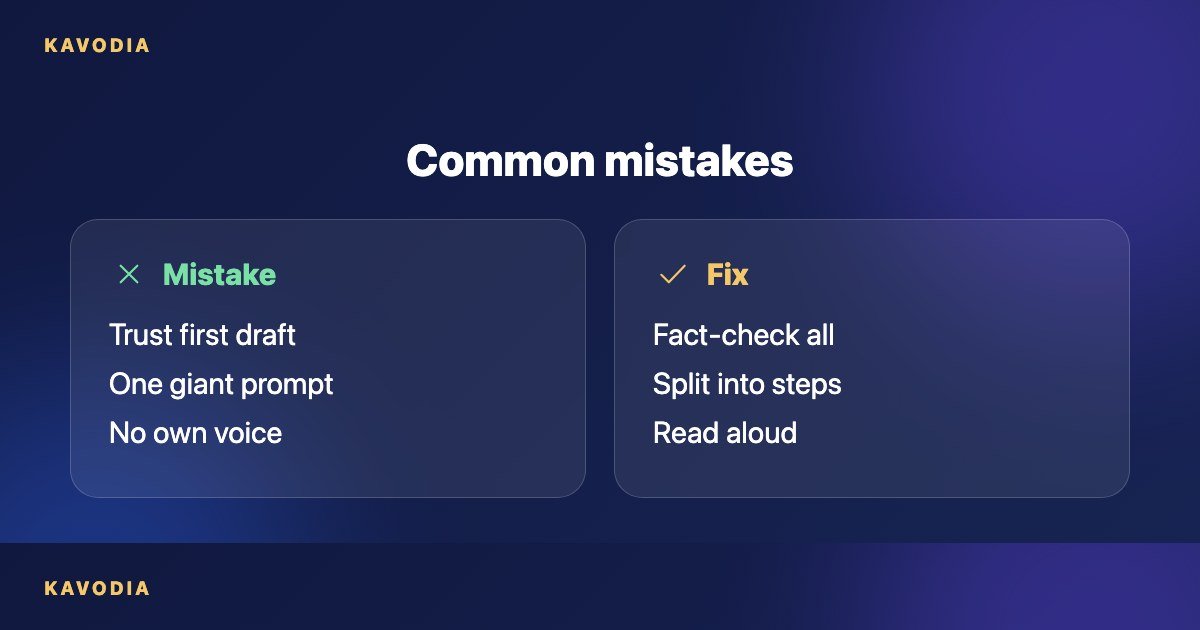
The biggest mistake is trusting the first draft. ChatGPT produces fluent text that can hide wrong assumptions or invented details. Always fact-check legal requirements, financial figures, and market data against official sources.
A second common error is using one massive prompt. The OpenAI guide advises giving the model time to "think" by breaking tasks into steps. A single prompt that says "Write my entire business plan and marketing strategy" will produce shallow output. Five focused prompts produce depth.
A third trap is forgetting your own voice. If every page on your website sounds like it was written by the same AI, your brand loses personality. Read each paragraph aloud. If it does not sound like something you would say in a real conversation, rewrite it.
Imagine a founder who copies a full ChatGPT business plan into a pitch deck. An investor asks about the revenue assumptions, and the founder cannot explain them because the numbers came from the model. He loses credibility. The fix: own every number in your plan.
How Do You Launch and Iterate After Day One?
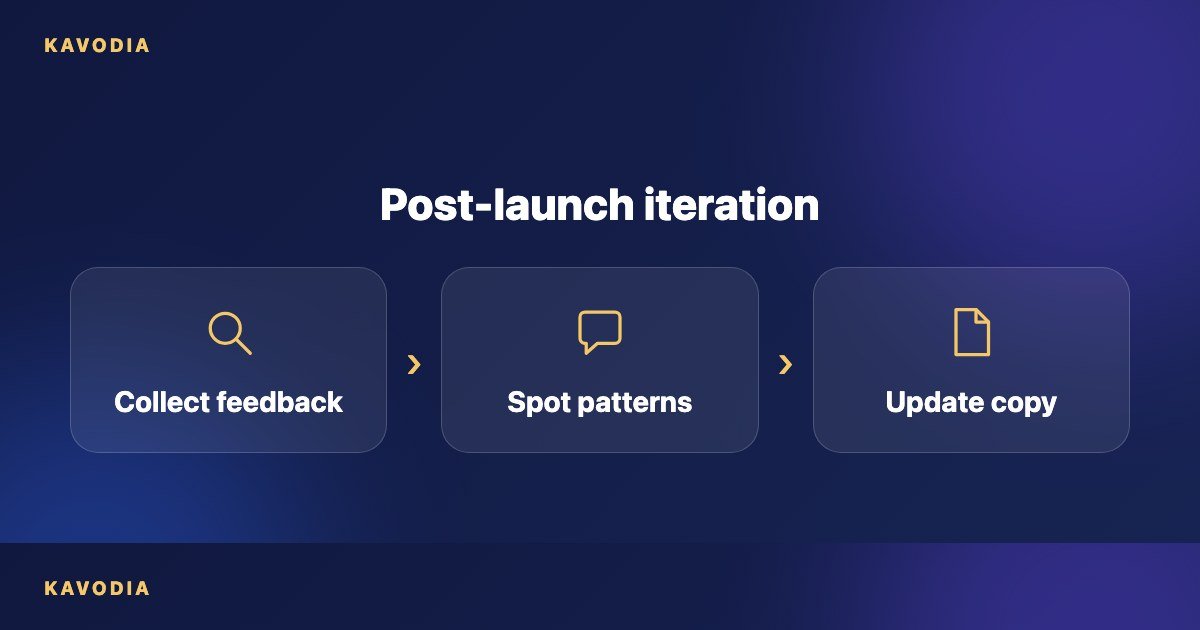
Launch day is not the finish line. Plan your first 30 days with weekly review points. Ask ChatGPT to create a post-launch checklist: monitor website traffic, collect customer feedback, and adjust your messaging based on what resonates.
After the first week, paste your early customer reviews or feedback into ChatGPT and ask it to spot patterns. Are buyers confused by the pricing? Do they mention a feature you did not highlight? Use those insights to update your product descriptions, your homepage, and your social media posts.
Let's take an example. A subscription box founder notices that three out of ten early reviews mention surprise at the packaging quality. She asks ChatGPT to rewrite her product description to lead with the unboxing experience. Conversions rise because the copy now matches what buyers actually value.
I recommend scheduling a monthly "prompt audit." Revisit your saved templates, update any outdated details, and test new phrasings. Your prompts should evolve as your business grows.
Frequently Asked Questions
Can You Start a Business Using Only ChatGPT?
ChatGPT handles research, writing, and brainstorming, but you still make the decisions and verify every fact. It works as a drafting partner, not a replacement for professional legal or financial advice. Use it to save time on repetitive tasks and redirect that time toward building relationships with real customers.
Does ChatGPT Give Reliable Legal or Tax Advice?
No. ChatGPT can outline common business structures and typical permits, but its knowledge may be outdated or too general for your location. Always confirm legal and tax details with a qualified professional in your jurisdiction before filing any paperwork.
How Many Prompts Does It Take to Write a Business Plan?
Plan for 8 to 15 focused prompts. Each section of the plan (executive summary, market analysis, revenue model, marketing, operations) benefits from its own prompt with specific constraints. One giant prompt produces shallow results.
Is a Paid ChatGPT Plan Necessary to Launch a Business?
The free tier covers most brainstorming, writing, and planning tasks. A paid plan gives you longer context windows, access to newer models, and features like file uploads. If you process large documents or need faster responses during a launch sprint, the upgrade may save you time.
What Is the Best Way to Fact-Check ChatGPT Output?
Cross-reference every number, date, and legal claim against official sources such as government websites, published research, or verified supplier data. If ChatGPT cites a statistic, search for the original report. Treat the model's output as a first draft that needs human review.